
Panchakarma
Rasayana: Ayurveda's Strengthening Regimen Explained
Rasayana is not a single remedy but a whole branch of ayurveda on how the body is strengthened after cleansing. What the classical texts say about it, what such a course is made of, and which promises have nothing to do with rasayana.
What ayurveda calls rasayana
Rasayana is a Sanskrit word made of two parts: rasa, the nourishing fluid and the first of the body’s tissues, and ayana, a path. Literally, “the path of rasa”: whatever carries nourishment to the tissues and sustains them. It is the name not of one remedy but of a whole branch of ayurveda.
And it is a large branch. In the Charaka Samhita it opens the section on treatment: first rasayana, then vajikarana, the teaching on vigor and fertility. That position in the book shows how rasayana was regarded: not as an add-on at the end of a course, but as a distinct way of working with the body, standing alongside the treatment of disease.
The aims the texts name sound broad: longevity, a clear memory, a calm mind, healthy tissues, resilience. It is important to read this as the language of the classical texts, not as a promise.
The logic of the branch rests on the idea of tissues. Ayurveda describes the body as a chain: food is turned into rasa, the nourishing fluid, and from it blood, muscle, fat, bone, marrow and reproductive tissue form in turn. Each tissue draws what it needs from the one before. So in this logic, working on the first link affects all the others — and that is exactly what the name of the branch promises: not “a pick-me-up” but a path of nourishment.
South India’s neighboring medicine has a branch of its own like this. Siddha — a separate Tamil system, not an offshoot of ayurveda — calls it kaya kalpa, “transformation of the body”; the National Institute of Siddha in Chennai considers it a distinctive feature of the whole system. Its texts and formulations are its own, Tamil ones, and it isn’t called rasayana.
Why rasayana comes after cleansing
The classics set out an order: cleansing first, then strengthening. Panchakarma follows the same order — a set of cleansing procedures followed by a restorative regimen.
The texts explain it with an image that needs no medical terms: there is no point dyeing cloth that hasn’t been washed, because the dye won’t take evenly. In the same way, there is no point giving strengthening remedies to a body whose digestion is disturbed and which carries undigested residue — what ayurveda calls ama. First the obstacle is removed, then the body is nourished.
This is why rasayana is not a stand-alone purchase but part of a plan. Whether a person needs the cleansing part, and how much of it, is decided by the doctor at the examination. The doctor also decides where to begin if cleansing is contraindicated.
The two ways described in the texts
The Charaka Samhita distinguishes two ways of taking a course, and they differ not in the remedies but in how you live for the duration.
- Kutipraveshika — “entering the hut”. The person lives in a separate dwelling, under supervision, with a limited range of activities and company. The texts describe this course as stronger and more demanding: it doesn’t suit everyone or every time.
- Vatatapika — “in the wind and sun”, that is, a course taken in everyday life. The person goes on working and attending to their affairs, and the regimen and remedies are chosen to make that possible. This way is described as gentler and accessible to most people.
The division is practical, not hierarchical: the second way is not a “lite version” of the first but a different plan for different circumstances.
The choice between the two is made not by preference but by the person’s condition and the season. The texts link strengthening courses to the time of year: what is appropriate in the cool season is prescribed differently in the heat, or not at all. This is a general rule of ayurveda, and rasayana is no exception.
What a rasayana regimen is made of
Ready-made formulations come last in this branch, not first. The texts give the foundation to simple things.
- Diet. Food the person can digest easily at this time: warm, fresh, simply cooked. The general rules are in the article on the ayurvedic diet.
- Routine. Sleep, mealtimes, moderation in work and exertion. Ayurveda describes this as dinacharya, the daily routine, and the texts don’t consider rasayana without it.
- Treatments. Oil and warming treatments, prescribed according to the person’s condition rather than from a list.
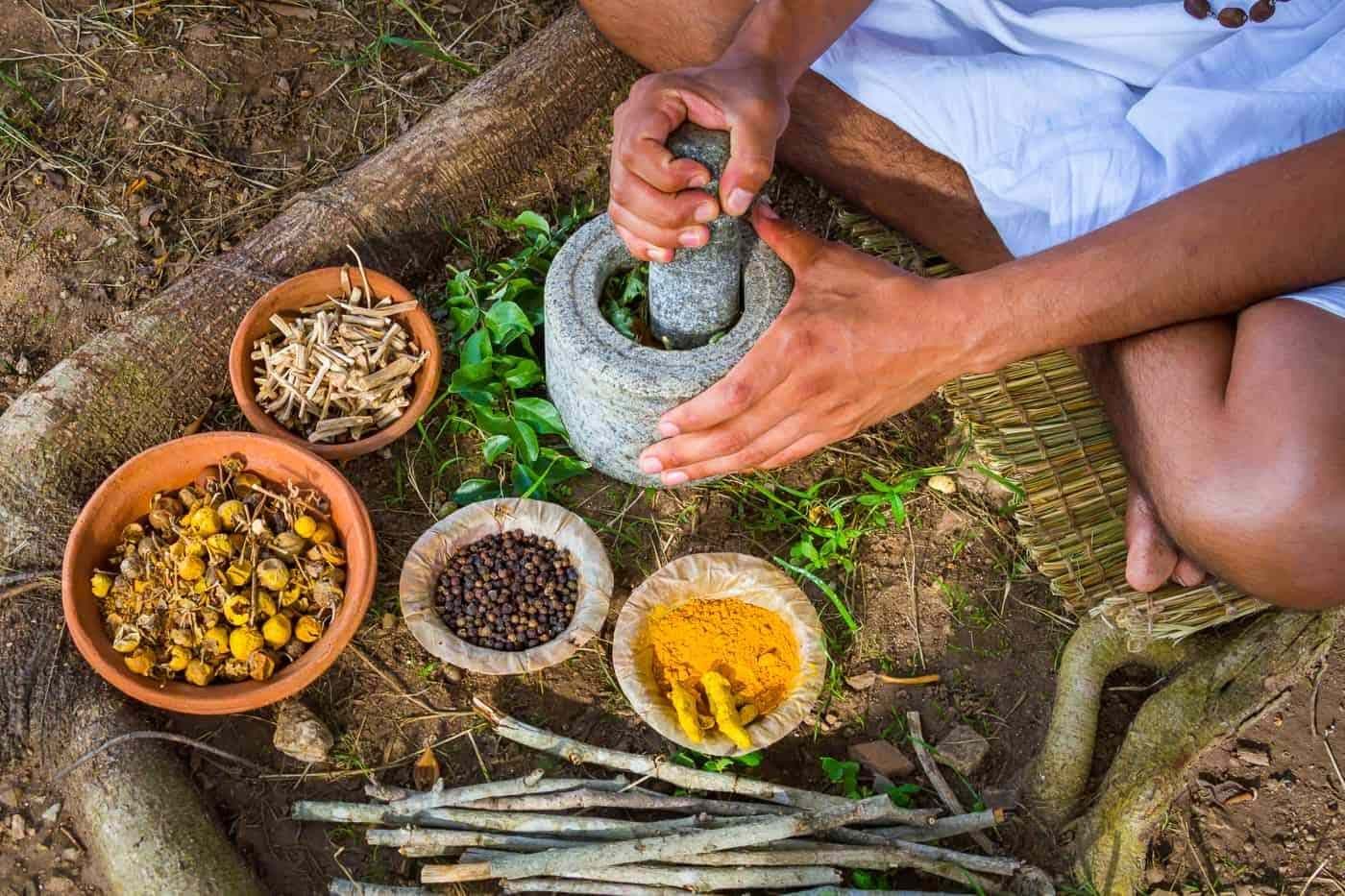
- Formulations. Classical preparations based on herbs, honey and ghee. Ayurvedic pharmacies still sell them today; some classical formulations contain minerals and metals.
The texts name these formulations explicitly, and some of them are familiar today from the pharmacy shelf. One of the first rasayanas the Charaka Samhita describes is chyavanaprasha, a preparation based on amalaki (Indian gooseberry) with honey and ghee; it is named after the sage Chyavana and is sold around the world as chyawanprash. Alongside it stand brahma rasayana and amalaki rasayana, and as a separate group medhya rasayana, preparations that the texts associate with memory and attention: mandukaparni (often also called brahmi), yashtimadhu (licorice), guduchi and shankhapushpi. In a classical text a name always comes with a method of preparation and a way of taking it, and neither of these carries over to something bought off a shelf.
The formulations deserve a separate, firm word. They are prescribed by a doctor — for the person, not for the name of a condition. Don’t buy them at random online: the composition and manufacturer matter as much as the name, and you should choose products from a reputable manufacturer with GMP certification. There are deliberately no dosing schedules here: that is not a matter for an article but for a prescription.
In practice the strengthening part usually goes together with the cleansing part — this is how panchakarma programs are built too, where the procedures are followed by a recovery regimen rather than a simple goodbye.
Achara rasayana: conduct as a remedy
The part of the branch that most surprises a modern reader is achara rasayana, “the rasayana of conduct”. The Charaka Samhita lists it not as morality but alongside the remedies: truthfulness, freedom from anger, self-restraint, calm speech, respect for elders, moderation, regular sleep and waking, goodwill.
The text’s logic is simple: a person who lives this way gets the same from a strengthening course as they would from formulations. But it is worth knowing: without this part, the rasayana branch reads like a list of potions, which it is not.
In practice this part also explains why a classical course requires a calm routine. A strengthening regimen laid on top of sleepless nights and constant rush is not considered rasayana at all in the texts — more like remedies wasted.
What rasayana is not
The word “rasayana” appears often on packaging and in advertising today, and promises quickly stick to it. What has nothing to do with rasayana:
- Treating diseases. Rasayana is not therapy for a diagnosis. If you have complaints, you see a doctor rather than buying a strengthening preparation.
- Turning back the clock. Translations like “rejuvenation” convey the meaning only roughly and promise more than the texts say.
Separately: pregnancy, chronic illness and prescribed medication are all reasons not to start anything on your own. This article does not replace a consultation.
What students learn here
At the school, rasayana is not a separate subject but something students see in the clinic every day: how the doctor prescribes a regimen after the procedures, how the recommendation for one person differs from that for another, why the strengthening part doesn’t start on day one. On the school’s courses this part is studied together with preparation for procedures — the two ends of one and the same treatment plan.
Sources
- Charaka Samhita, Chikitsa Sthana, 'Rasayana Adhyaya' — the definition of rasayana, the two ways of taking a course, achara rasayana
- Sushruta Samhita, Chikitsa Sthana — the chapters on rasayana: the place of the branch among the modes of treatment
- Ashtanga Hridaya (Vagbhata), Uttara Tantra — the section on rasayana and the order of prescribing it after cleansing
- Vasant Lad. Textbook of Ayurveda — rasayana as a branch of therapeutic principles and its place after panchakarma
Frequently asked questions
Is rasayana a set of remedies or a regimen?
Both, and the texts describe the regimen in more detail. Rasayana is the name of a whole branch: diet, daily routine, conduct, and only then ready-made formulations. A course made up of pills alone is not rasayana in the classical sense.
Can I do rasayana without cleansing?
The texts put cleansing first and explain it with an image: there is no point dyeing cloth that hasn't been washed. The decision is the doctor's, who also determines whether a person needs the cleansing part at all.
Does rasayana rejuvenate?
The classical texts speak of longevity, memory and resilience — that is their language, not a promise of results.
Do I need to go to a clinic for rasayana?
Not necessarily. The texts describe two ways: a secluded course under supervision, and a course taken in everyday life, alongside your usual commitments. The second is described as gentler and more accessible.
How long does a rasayana course last?
The texts give no single length: rasayana is described as a course tailored to the person, their condition and the season. The duration is set by the doctor.
Message us
We reply personally, tell you more and help you choose the program and dates. The message is pre-filled — just press Send.
We usually reply within a few hours.