
Basics
The Three Doshas: Vata, Pitta, Kapha
The doshas are the three principles Ayurveda uses to describe how the body works: movement, transformation and structure. We explain how they work according to the classical texts, what is meant by imbalance, and why a magazine quiz does not replace a doctor's examination.
What is a dosha
Dosha is a basic concept of Ayurveda. It names the three principles the tradition uses to describe how body and mind work: vata, pitta and kapha. Literally the word means “that which spoils or puts out of order”. The name is apt: while the doshas are in balance, a person does not notice them. They become noticeable when there is too much of one.
According to the classical texts each dosha is responsible for its own set of functions. Vata governs movement: breathing, nerve impulses, the passage of food, elimination. Pitta governs transformation: digestion, metabolism, body heat, sharpness of mind. Kapha governs structure: firmness, lubrication of the joints, moisture, stamina.
The doshas are the language in which an Ayurvedic doctor describes a person and chooses their diet, oils and treatments. Below we set out this language as the texts give it.
What elements the doshas are made of
Ayurveda describes the world through five great elements: space (ether), air, fire, water and earth. Each dosha is assembled from them. From the elements it inherits its qualities — and these are how a doctor recognizes it in the body.
- Vata — air and space. Qualities: light, dry, cold, rough, mobile, subtle. Its main sites in the body are below the navel: the colon, lower back, bones.
- Pitta — fire. In some textbooks, Vasant Lad’s for example, fire with some water. Qualities: hot, sharp, liquid, slightly oily. Its sites are between the navel and the heart: the stomach, blood, sweat.
- Kapha — water and earth. Qualities: heavy, oily, cold, stable, dense. Its sites are above the heart: the chest, throat, head, and also the joints.
Working with the doshas is built on these qualities. Like increases like; opposites balance. Cold, dry vata is calmed by what is warm and oily. Hot pitta by what is cooling. Heavy kapha by what is light, dry and warming. This rule underlies the choice of oil for abhyanga and any other treatment.
How the doshas show in body and character
Everyone has their own balance of doshas. According to the texts, the predominant dosha shows in both build and habits.
- Vata predominant. A slim, light body, dry skin. Appetite and digestion are irregular. Sleep is light. Such a person moves and speaks quickly, picks things up quickly and tires quickly, and is prone to anxiety.
- Pitta predominant. A medium build, warm skin prone to rashes and moles. Strong appetite and thirst: a skipped lunch is hard to bear. Assertive character, sharp mind, quick to irritation.
- Kapha predominant. A strong, solid body, smooth skin. Moderate appetite, slow digestion. Deep sleep. Such a person is calm, has stamina and resists illness, but is slow to get going.
Pure types are rare. Most people show two doshas, and the portrait comes out mixed. More on the inborn constitution and how it differs from the current state in Prakriti and vikriti.
What “dosha imbalance” means
In Ayurveda health is when the doshas hold the proportion a person was born with. Imbalance is a departure from it. Most often a dosha increases: it accumulates, then becomes “aggravated” and starts producing symptoms. The classical texts describe these stages as accumulation, aggravation and pacification.
What shifts the doshas, according to the texts:
- Food and habits. Dry, cold food, irregularity and lack of sleep increase vata. Pungent, sour food and overheating increase pitta. Heavy, fatty food, daytime sleep and inactivity increase kapha.
- Time of day. Kapha predominates at the start of the day and night, pitta in the middle, vata at the end. This is the basis of dinacharya, the Ayurvedic daily routine.
- Season. According to the Charaka Samhita, vata accumulates in summer and becomes aggravated in the rainy season. Pitta is aggravated in autumn, kapha in spring. These shifts are the basis of ritucharya, the Ayurvedic seasonal routine.
- Age. Childhood is considered the time of kapha, adulthood of pitta, old age of vata.
A typical example. A vata-predominant person flies a lot, eats on the run and sleeps five hours a night. An Ayurvedic doctor would describe the result as aggravated vata: dryness, bloating, insomnia, anxiety. And would choose the opposite qualities — warm, oily food, a regular routine, treatments with warm oil.
Why a magazine quiz doesn’t work
A ten-question quiz tells you “you are vata”. There are two problems with that.
First, the quiz relies on your opinion of yourself. Someone who has lived under stress and slept badly for years will answer “like a vata” even if their constitution is kapha. A questionnaire cannot tell the inborn from the accumulated, and for a doctor that is the key question.
Second, the quiz result leads nowhere. Knowing “I am pitta” does not by itself tell you what needs changing now. That depends on your current state, which a questionnaire cannot see.
How a doctor determines your dosha
An Ayurvedic doctor builds the picture from several sources: looking, touching, asking.
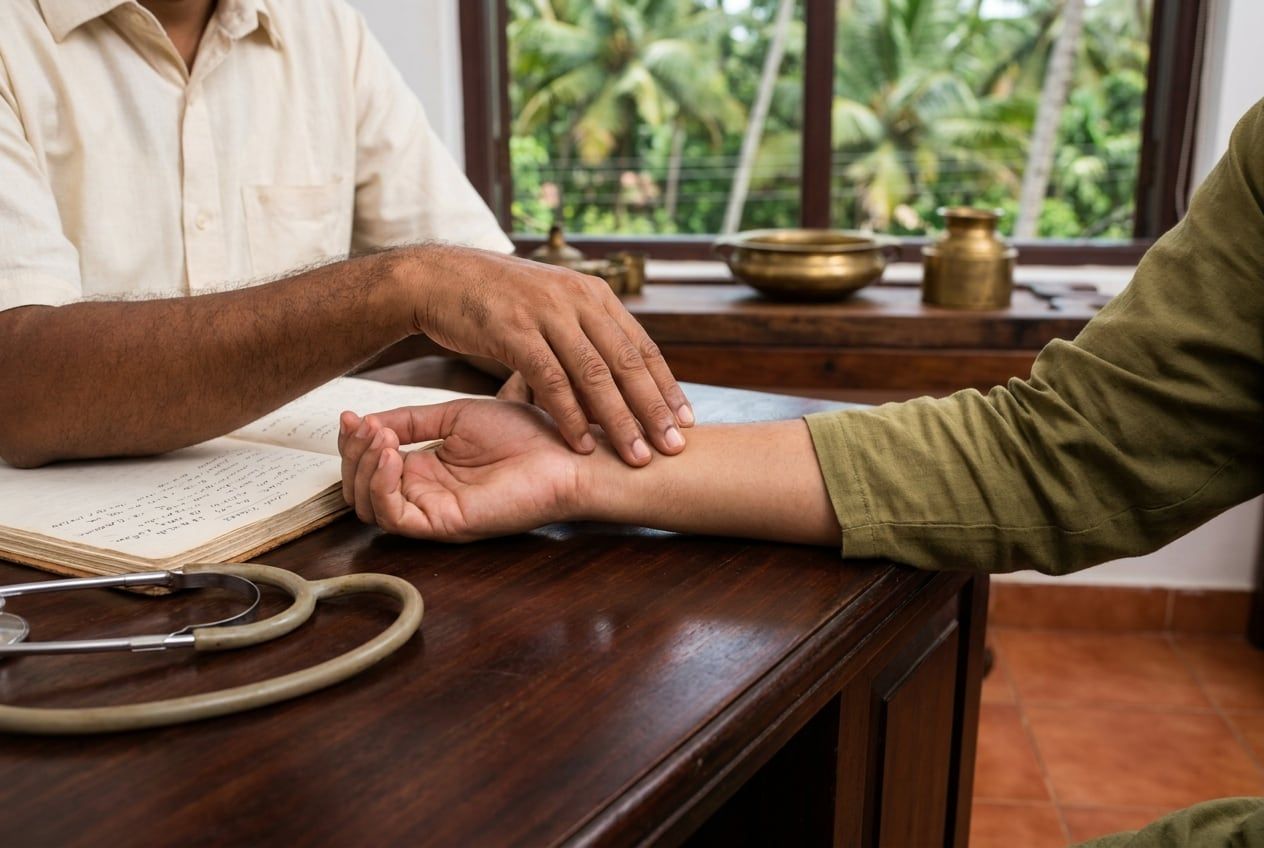
- Pulse. The doctor places three fingers on the radial artery at the base of the thumb. Tradition describes the vata pulse as moving like a snake, the pitta pulse as jumping like a frog, the kapha pulse as gliding like a swan.
- Examination. Build, skin, hair, eyes, nails. Separately, the tongue: its shape, color and coating.
- Questions. Appetite, digestion, bowels, sleep, tolerance of heat and cold, response to stress, past illnesses. The doctor is interested both in what the person has always been like and in what has changed recently.
Much here depends on the doctor’s school and experience, so it matters where and how they trained. Diet, oils and treatments for the state of the doshas are prescribed by a doctor.
The doshas on the school’s courses
On Ayurvedashala courses theory begins with the doshas. Without them it is impossible to understand why a doctor prescribes warm sesame oil for one patient and a cooling oil for another, why udvartana is done with a dry powder, and how treatment protocols differ. Students learn to read the doctor’s prescriptions in this language and watch how it is applied at the treatment table, not only in the textbook.
Find your dosha
To see which doshas are pronounced in you, take our dosha test: 21 questions based on the classical texts, with your vata, pitta and kapha proportions shown straight away, and a detailed breakdown with diet and routine sent to you by messenger.
Sources
Frequently asked questions
How do I find out my dosha?
Reliably, only in a consultation with an Ayurvedic doctor, who checks the pulse, tongue and build and asks detailed questions. An online test will at best show your idea of yourself, not your constitution.
Can your dosha change over a lifetime?
According to the Ayurvedic texts, the inborn balance of doshas stays with a person for life. What changes is the current state: doshas accumulate and become aggravated through food, routine, season and age.
Which dosha is the best?
There is no good or bad dosha. The classical texts regard a constitution in which the three doshas are balanced as favorable, but it is rare. Each type has its strengths and its vulnerabilities.
Message us
We reply personally, tell you more and help you choose the program and dates. The message is pre-filled — just press Send.
We usually reply within a few hours.