
Basics
Kapha Dosha: Signs, Diet and Routine
Kapha is the dosha of structure: Ayurveda assigns to it everything in the body that holds form, lubricates and retains moisture. It is heavy, cold, moist and stable, and goes out of balance with rich food, damp and inactivity. We cover the signs of a kapha constitution, the signs of its aggravation and what balances it: tastes, routine and movement.
What is kapha
Kapha is one of the three doshas of Ayurveda, the principle of structure. Tradition assigns to it everything in the body that holds form and retains moisture: the density of tissues, lubrication of the joints, moisture of the mucous membranes, stamina, calm and a long memory. The name comes from Sanskrit roots meaning “water” and “to hold together”.
We have written about the three doshas as a whole separately — in The three doshas: vata, pitta, kapha. Here we look at kapha in detail: how it is recognized, what throws it out of balance and what balances it.
An important caveat first. The doshas are a model of traditional medicine, not a concept of modern physiology. No test will show kapha. What follows is how the classical texts describe it and how an Ayurvedic doctor works with it.
The qualities of kapha and where it lives
Kapha is made of earth and water. From them it inherits its qualities, and all work with it is built on these:
- Heavy — a solid build; weight is gained easily and lost with difficulty.
- Cold — skin cool to the touch; damp and cold are hard to tolerate.
- Moist and oily — soft skin, not prone to dryness.
- Slow — unhurried movements, calm speech, unhurried digestion.
- Smooth and dense — even skin, thick hair, firm tissues.
- Stable — habits, attachments and moods change slowly.
According to the texts, kapha’s main sites in the body are above the heart: the chest, throat, head, upper stomach, as well as the joints, fat tissue and tongue. The chest is considered its principal seat, which is why kapha disorders often begin in the breathing and throat.
The rule that underlies all work with the doshas: like increases like, opposites balance. Heavy, cold, moist kapha is calmed by what is light, warm, dry and mobile — and here routine helps simple food and spices more than any treatment does. The choice of oil for a treatment follows the same rule: more in Oils for Ayurvedic massage.
What a kapha-predominant person looks like
The portrait of a kapha constitution from classical descriptions and textbooks:
- Build. Solid, well proportioned, with good reserves of strength; weight comes on easily.
- Skin and hair. Skin soft, smooth, cool, often fair; hair thick, glossy and heavy.
- Digestion. Steady but slow: moderate appetite, drowsy after meals.
- Sleep. Deep and long; waking is hard.
- Movement and speech. Unhurried and smooth; a low, soft voice.
- Mind. Learns slowly but remembers for a long time; good at seeing long projects through.
- Under pressure. What comes first is not anxiety or irritation but slowing down: the person withdraws, procrastinates, clings to the familiar.
Pure types are rare: most people show two doshas. How the inborn constitution differs from the current state is covered in Prakriti and vikriti.
When kapha goes out of balance
It is important not to confuse two different conversations. A kapha constitution is what a person is born with; it is not treated and does not change. Aggravated kapha is a current state, and it can arise in anyone, regardless of constitution.
How an Ayurvedic doctor describes aggravated kapha:
- heaviness in the body, sluggishness, daytime sleepiness;
- mucus in the throat and nose, congestion, frequent colds;
- a coated tongue, a sweetish taste in the mouth;
- slow digestion, heaviness and nausea after eating;
- swelling, fluid retention, weight gain;
- stiff joints, especially in the morning and in damp weather;
- reluctance to move or start anything new, low mood.
The texts describe this process in stages: first the dosha accumulates, then it becomes aggravated and starts producing symptoms. The point of the Ayurvedic routine is to step in at the first stage, before there are any complaints.
What increases kapha
According to the Charaka Samhita and the textbooks, kapha is increased by everything heavy, cold, moist and still:
- Food. Rich, fatty and sweet food, dairy, baked goods and sugar, iced drinks, overeating and late dinners.
- Rhythm. Daytime naps, long lie-ins, long hours sitting.
- Weather. Damp, cold, a drawn-out spring and a raw, chilly autumn.
- Movement. Its absence — for kapha this is the main factor, more important than any diet.
- Mindset. Attachment to the familiar, procrastination, reluctance to change one’s surroundings.
The most common example discussed on the courses: a person sits all day, eats heavily and late, naps after lunch and barely moves. A month later they come in with heaviness, swelling, mucus in the throat and no desire to start anything — and this is described as aggravated kapha.
Diet for kapha
The general principle: light, warm, dry, spiced and no snacking. Of Ayurveda’s six tastes, pungent, bitter and astringent balance kapha; sweet, sour and salty increase it.
What is usually advised for aggravated kapha:
- warm, simple food cooked without too much oil;
- more vegetables, legumes and bitter greens, less dairy and sweets;
- warming spices — ginger, black pepper, turmeric, mustard;
- the main meal in the middle of the day, a light early dinner;
- warm drinks instead of cold ones, and no snacking between meals.
What to avoid: cold food straight from the fridge, sweet pastries, too much cheese and cream, iced drinks, eating at night and the habit of finishing food because “it’s a shame to waste it”.
Why heaviness after meals lasts longer with kapha is explained by the concept of the digestive fire — see Agni and ama. The general rules of eating by dosha are covered in The Ayurvedic diet. An individual diet is prescribed by a doctor after an examination: it is not chosen from a text on the internet.
Daily routine and lifestyle
Kapha is the only dosha for which Ayurveda advises not rest but exertion: its problem is stagnation.
- rise early, before the morning kapha hours add heaviness;
- move every day, and more vigorously than is advised for vata and pitta;
- no daytime naps — Ayurvedic guidelines count them among the things that increase kapha;
- a dry body rub and a warm shower instead of a long soak in the bath;
- warmth and dryness in clothing and at home, especially in damp weather;
- the new instead of the familiar: a different route, different food, a different activity.
How Ayurveda structures the whole day is covered in Dinacharya: the Ayurvedic daily routine.
Treatments prescribed for kapha
In a clinic, warming and drying treatments are chosen for kapha conditions — by the same rule of opposites:
- Udvartana — a rub with herbal powders instead of oil; for kapha this is the main treatment.
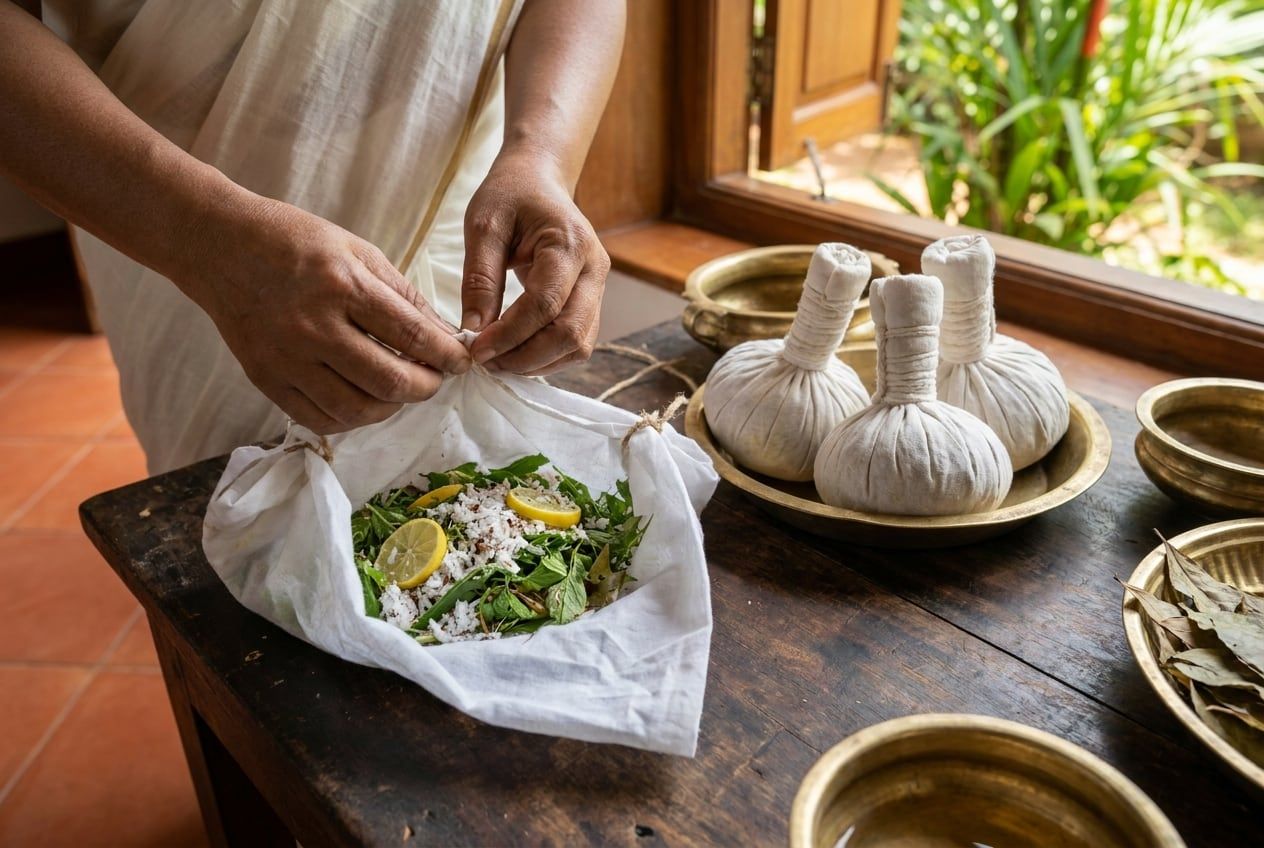
- Kizhi — sweating with herbal poultices; traditionally chosen for heaviness and stiff joints.
- Abhyanga with a warming oil — less oil is used than for vata, and it is rubbed in more vigorously.
- Vamana — the cleansing procedure the classical texts consider the main one specifically for kapha; it is part of a panchakarma program, requires specific indications and is prescribed by a doctor.
Treatments are prescribed by a doctor after an examination, taking contraindications into account. Sweating and oil treatments are not done with a fever or acute infection, with indigestion and nausea, or on broken skin, and during pregnancy only on a doctor’s prescription.
Season, age and time of day
Kapha follows cycles, and Ayurveda takes them into account:
- Time of day. Kapha predominates in the first hours after dawn and in the early evening — hence morning heaviness after a late start and drowsiness after an early heavy dinner.
- Season. According to the Charaka Samhita, kapha accumulates in winter and becomes aggravated in spring; in northern climates its time is the damp spring and the thaw.
- Age. Childhood is considered the time of kapha: growth, dense tissues and a tendency to colds and mucus are its age-related signs.
So the same person receives different recommendations in autumn and in spring, and seasonality is an ordinary part of the Ayurvedic routine.
What this article does not replace
This article does not replace a consultation. You cannot determine your constitution from a description of signs, let alone prescribe treatment: similar complaints — swelling, sluggishness, heaviness, constant congestion — occur with conditions that have nothing to do with Ayurveda and need a regular doctor.
Medicines prescribed by a doctor are not stopped for Ayurvedic reasons.
If you’d like a first idea of your constitution, the dosha test takes a few minutes. It shows your view of yourself, not a diagnosis, but it is a convenient place to start the conversation.
Sources
Frequently asked questions
How do I know if I have a kapha constitution?
Reliably, only in a consultation with an Ayurvedic doctor, who checks the pulse, tongue, skin and build and asks detailed questions. The signs in this article give you an idea, but an inborn constitution is not determined from them.
How is a kapha constitution different from aggravated kapha?
Constitution is the inborn balance of doshas, and it does not change. Aggravated kapha is a current state: heaviness, sleepiness, mucus, swelling. Kapha can become aggravated in a person of any constitution.
What diet suits kapha?
According to the classical texts, kapha is balanced by light, warm, dry food with spices and by the pungent, bitter and astringent tastes. Sweet, sour, salty, cold and heavy foods increase it. An individual diet is prescribed by a doctor.
Why is daytime sleep discouraged for kapha?
Ayurvedic guidelines count daytime sleep among the things that add heaviness and slow digestion — that is, increase kapha. Exceptions are usually made for the sick, the very old, children and extreme heat.
Which treatments are prescribed for aggravated kapha?
Most often warming and drying ones: udvartana with herbal powders, sweating treatments with herbal poultices, treatments for the nose and head. A doctor prescribes them after an examination, taking contraindications into account.
Message us
We reply personally, tell you more and help you choose the program and dates. The message is pre-filled — just press Send.
We usually reply within a few hours.