School of Ayurveda and Panchakarma · Kerala, India
Ayurveda in India, first-hand: training and panchakarma
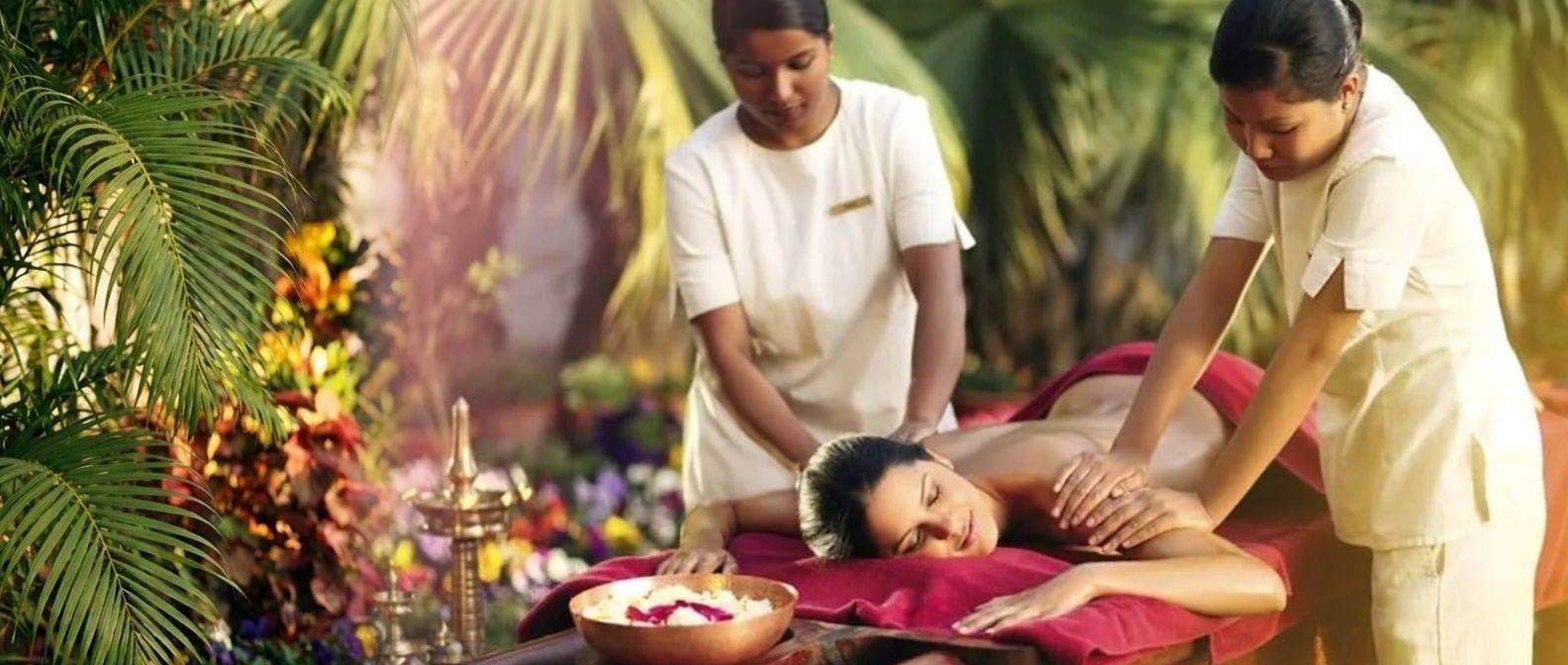
We welcome you for panchakarma from 7 days — by the ocean in Varkala or in the Himalayas — and teach Ayurvedic massage where treatments are done every day, with the doctors and therapists of Kerala. A school by the Rishikul Yogshala team: we have been running courses in India since 2010.
Panchakarma retreat
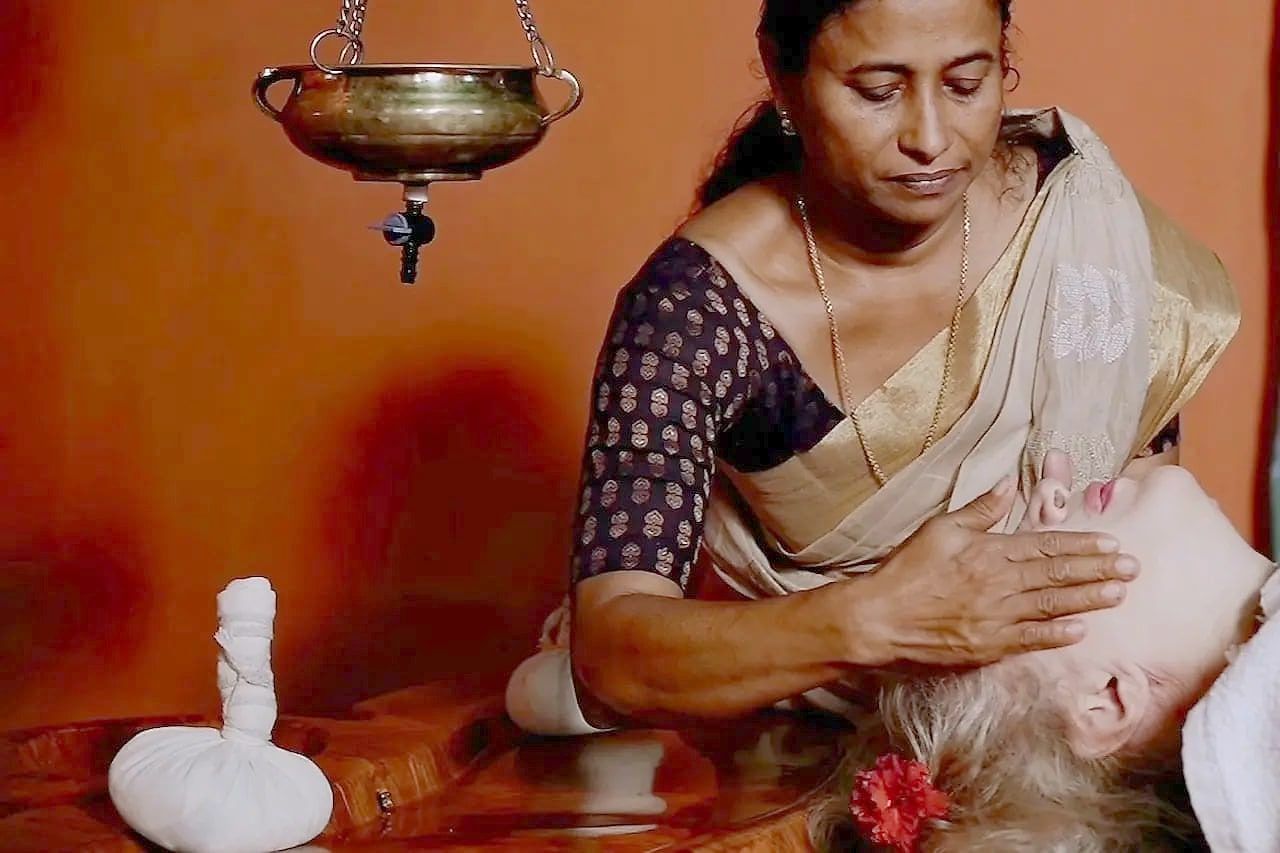
Programs of 7 to 28 days in Varkala by the ocean or in Rishikesh in the Himalayas: a doctor, prescribed treatments, meals and accommodation.
Details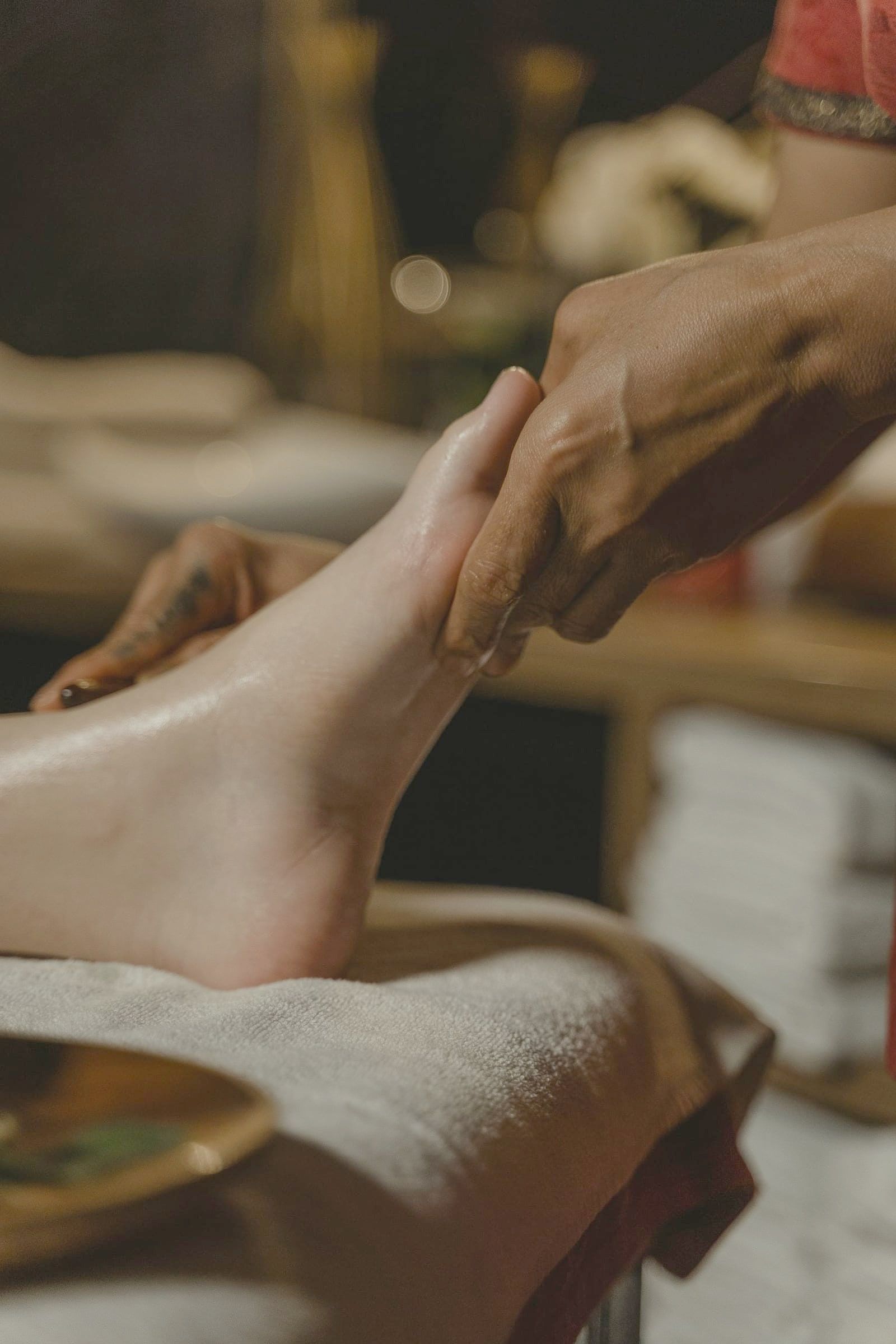
Ayurveda for yourself
Understand Ayurveda through practice and your own body, with no plan to work as a therapist. Same courses, no experience needed.
Details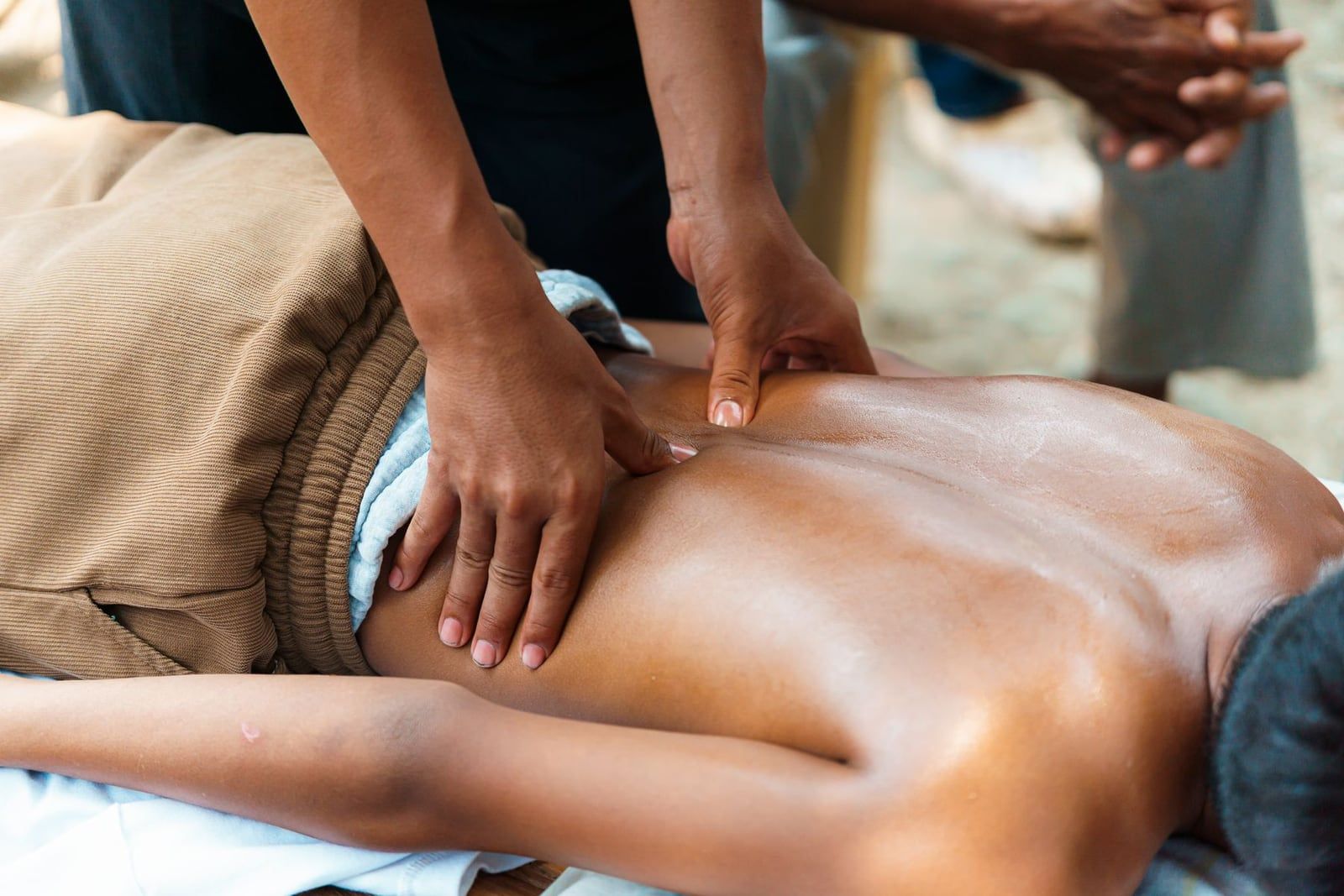
A new profession
Two-week and one-month courses: hand technique, classic Kerala treatments, a final assessment and a certificate.
DetailsSchedule
Upcoming intakes
-
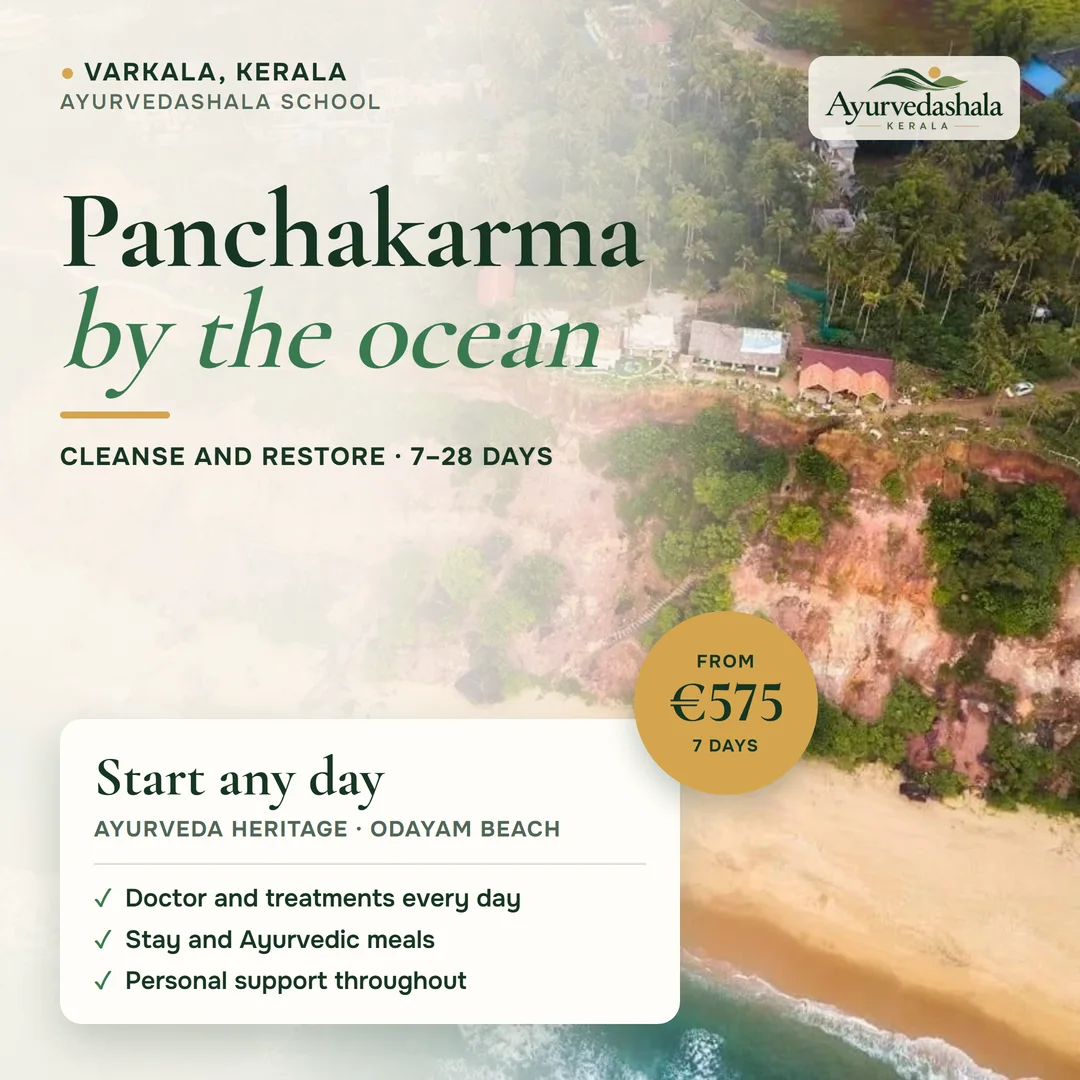
Start any day · Varkala
Panchakarma in Varkala
7–28 days from €575 Details → -
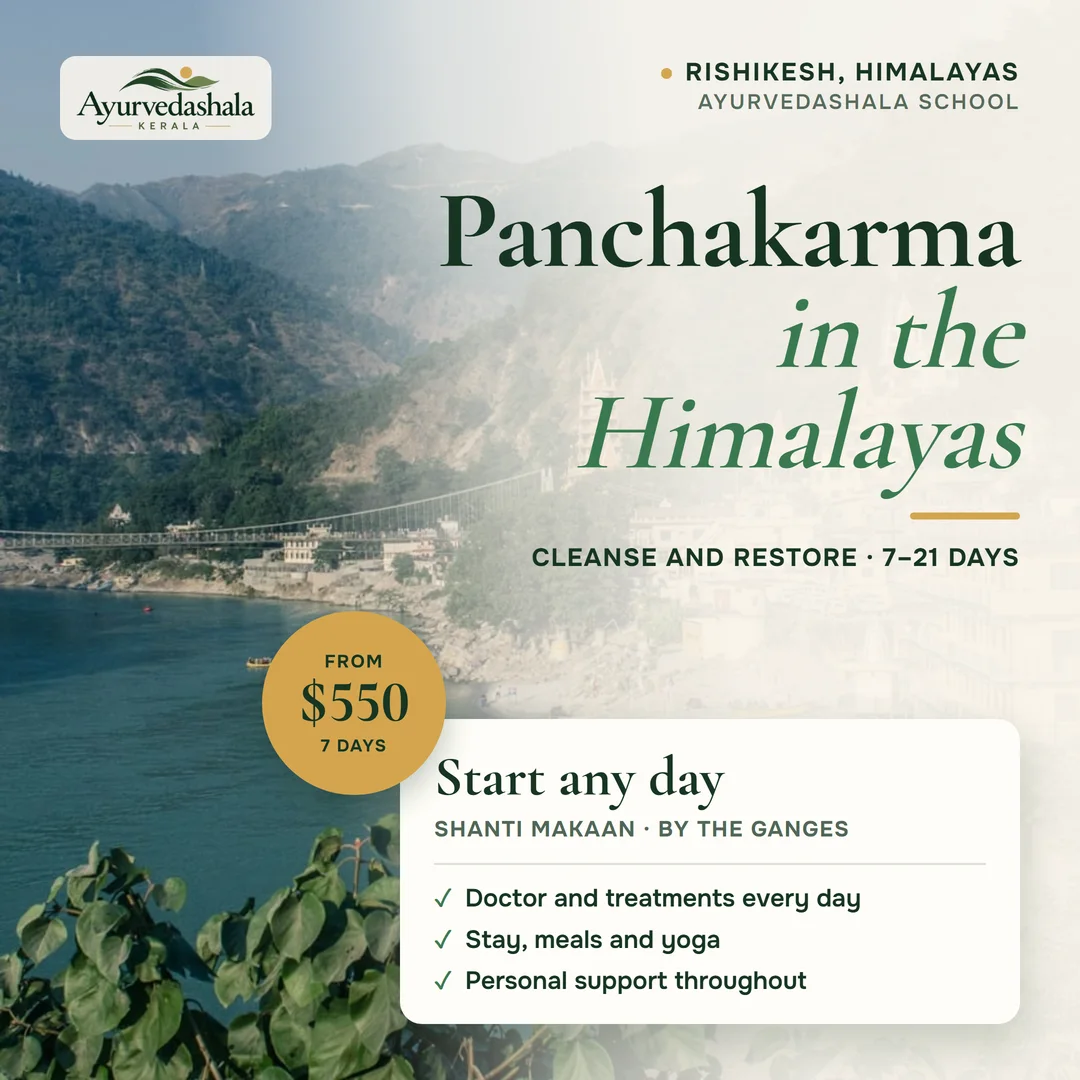
Start any day · Rishikesh
Panchakarma in Rishikesh
7–21 days from $550 Details → -
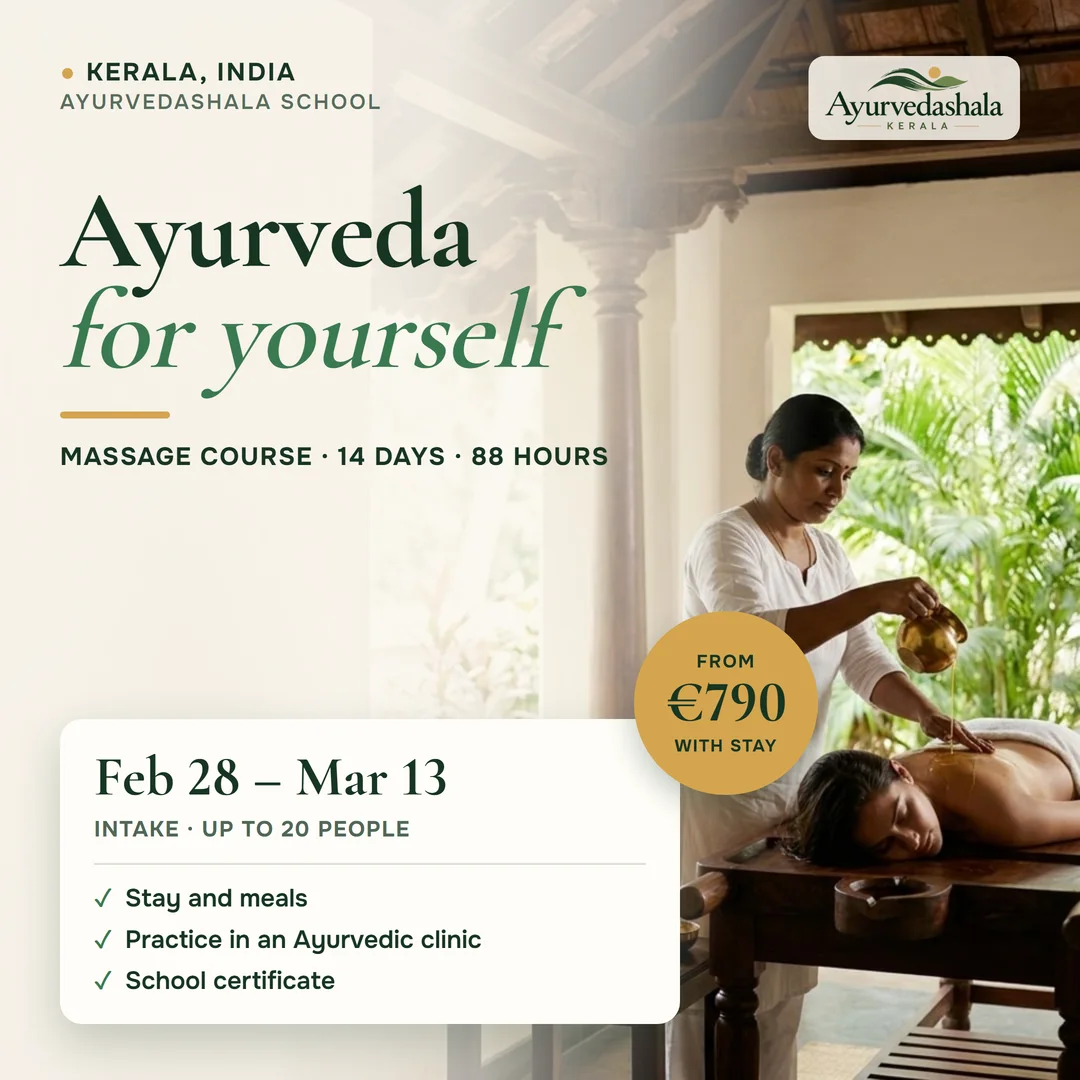
February 28 – March 13, 2027 · Malabar
Ayurvedic Massage Course in India: Two Weeks
20 seats left from €790 Details → -
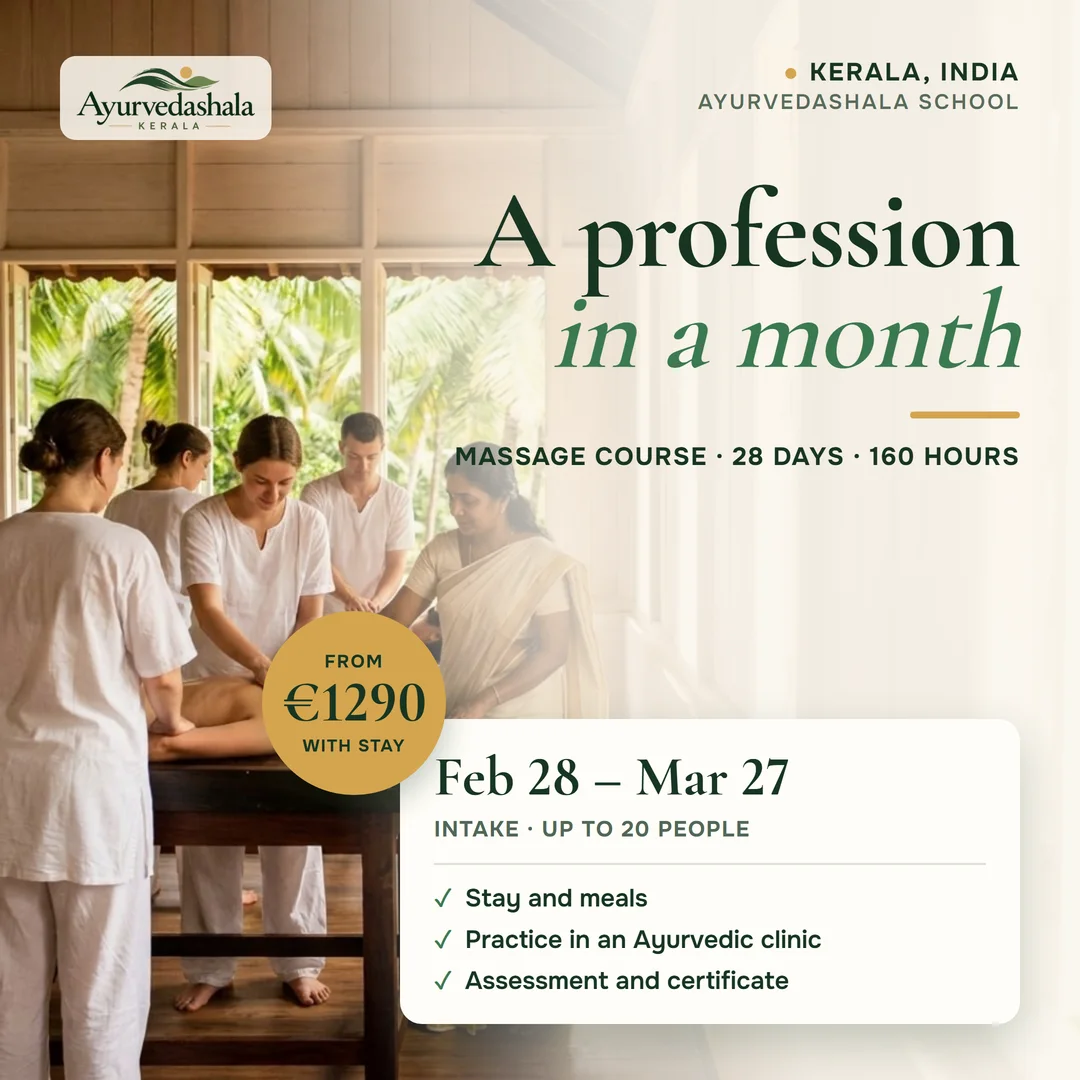
February 28 – March 27, 2027 · Malabar
Ayurvedic Massage and Panchakarma Course in India: 28 Days
20 seats left from €1290 Details →
Ayurveda where it is part of everyday life
Treatments here are done every day, oils and herbal pouches are prepared on site, and panchakarma runs as a full cycle — with a doctor’s consultation, diet and daily routine. You learn or recover inside this life, not in a classroom with a massage table.
Teaching and treatments are led by doctors and therapists for whom this is daily work. The Kerala school of Ayurveda is famous precisely for its treatments: pizhichil, njavara kizhi, elakizhi, dharas. Here they are not exotic extras in a program, but an ordinary day.
Panchakarma and retreat
If you would rather recover than study, come for panchakarma: from 7 to 28 days. A doctor’s consultation and treatments chosen for your constitution, Ayurvedic meals, a daily routine and accommodation — all in one place.
What the course includes
The course suits both those who come to understand Ayurveda for themselves and those who want to work with it.
- Online preparation before arrival. Recorded Ayurveda basics — 16 hours, so that on site you go straight to practice.
- Hands-on treatments. About two thirds of the time on site is practice: abhyanga, kizhi, shirodhara, preparing oils.
- Body and care. Anatomy and contraindications in plain language, so you can give treatments with confidence — to yourself, your family or clients.
- For those who want to work. How to receive clients and build your own practice.
- A school coordinator by your side throughout the course.
You arrive — we take care of the rest
Travelling to another country raises questions about visas, money and daily life. That's normal. Here is how we handle them.
-
Taught in English
Doctors and therapists teach in English, directly, with no interpreter in between. Online lectures are in English too.
-
Visa made simple
Most nationalities travel on the Indian e-Visa. We tell you which one fits your trip and send step-by-step instructions.
-
Pay in parts
A deposit of €100 secures your place, the balance is paid on arrival. Visa / Mastercard, bank transfer or USDT.
-
The route is clear in advance
Before you fly, you get directions from the airport to the centre and help with your transfer.
-
Live where you study
Accommodation, Ayurvedic meals and the daily routine are all arranged. Doctors are close by for any question about how you feel.
-
A coordinator by your side
A school coordinator stays with the group for the whole course and handles everyday matters, so you can focus on your practice.
Locations
Choose the place that feels right
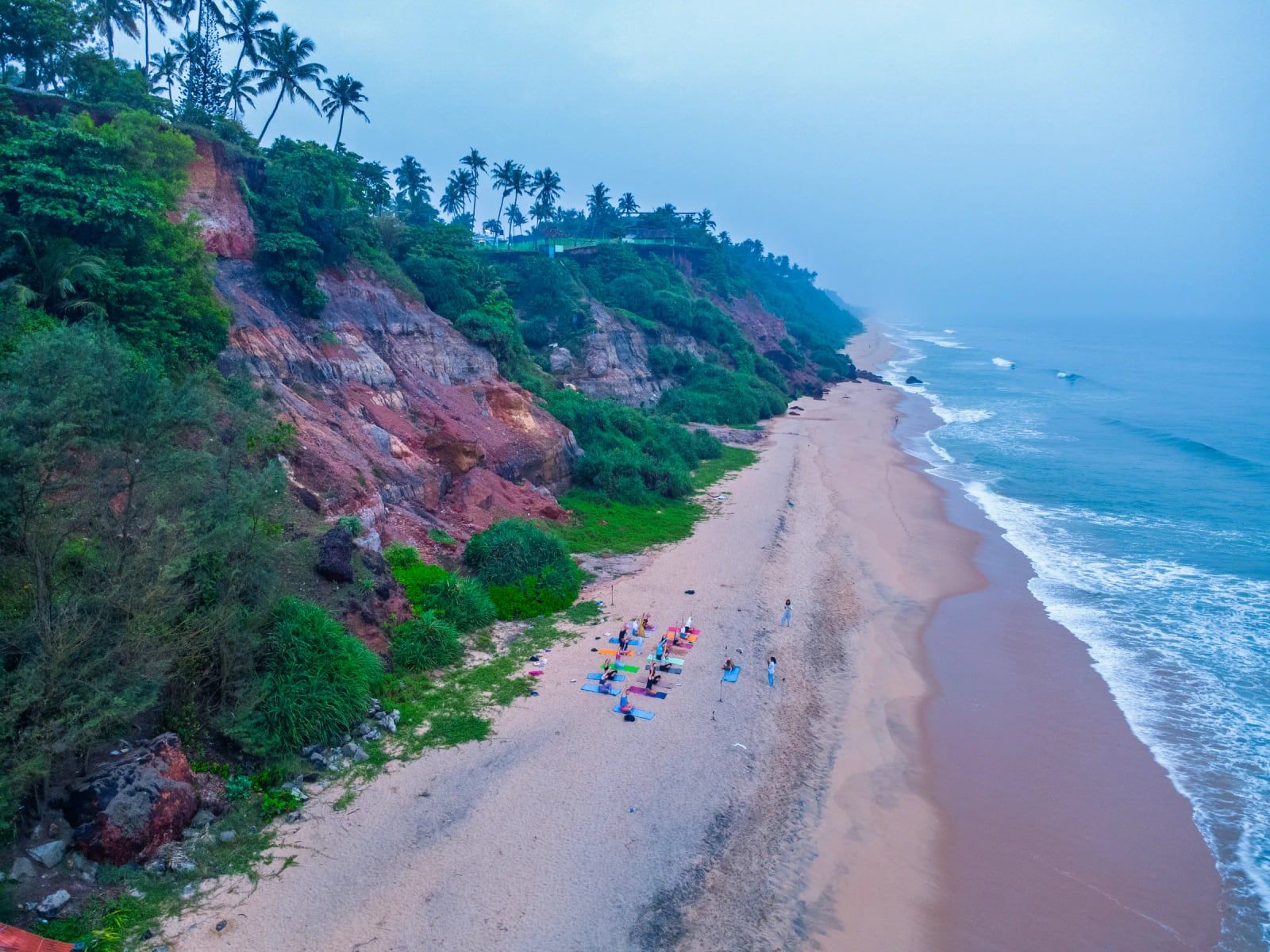
Varkala
A small town in South Kerala: a red cliff above the ocean, a long beach and an easy pace. This is where the school's panchakarma takes place.
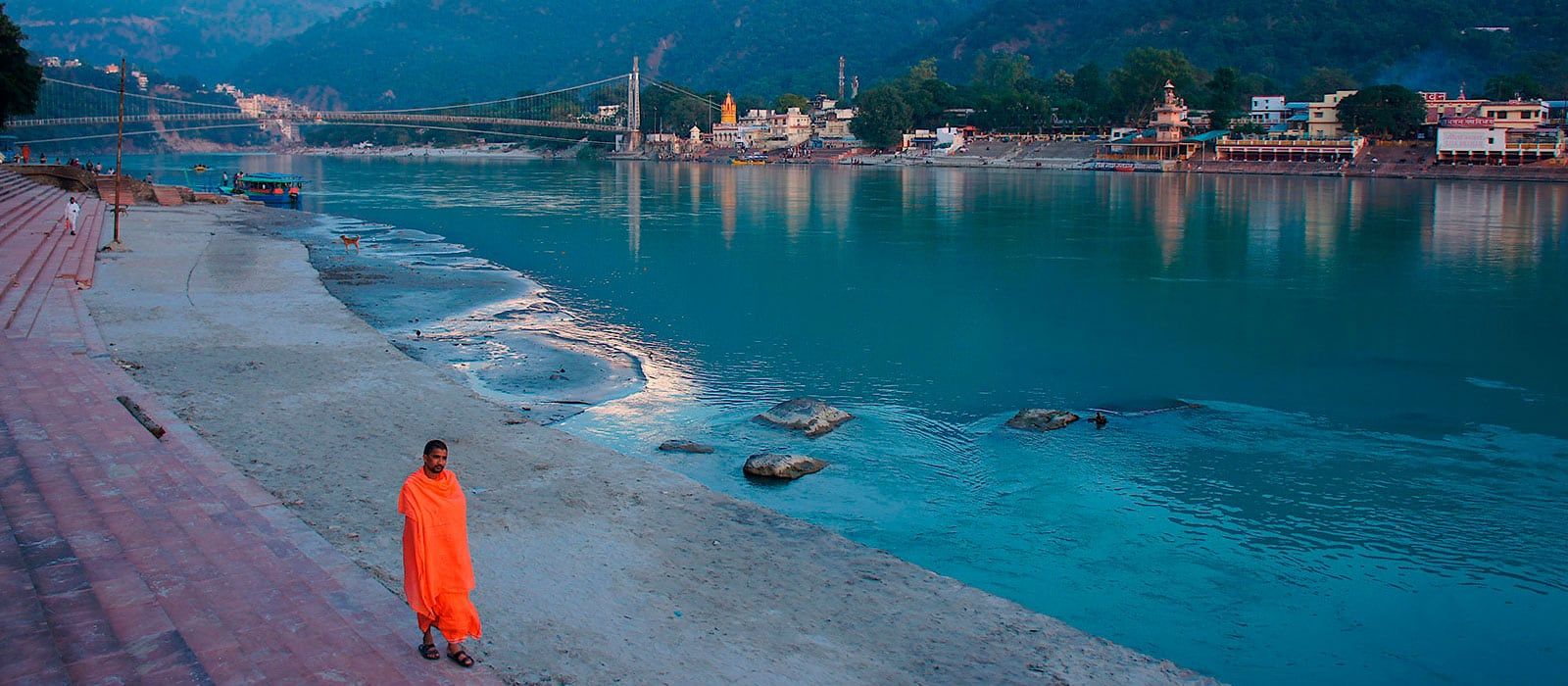
Rishikesh
North India, the Himalayan foothills. A quiet Ayurvedic center within walking distance of the Ganga, where the school's panchakarma takes place.
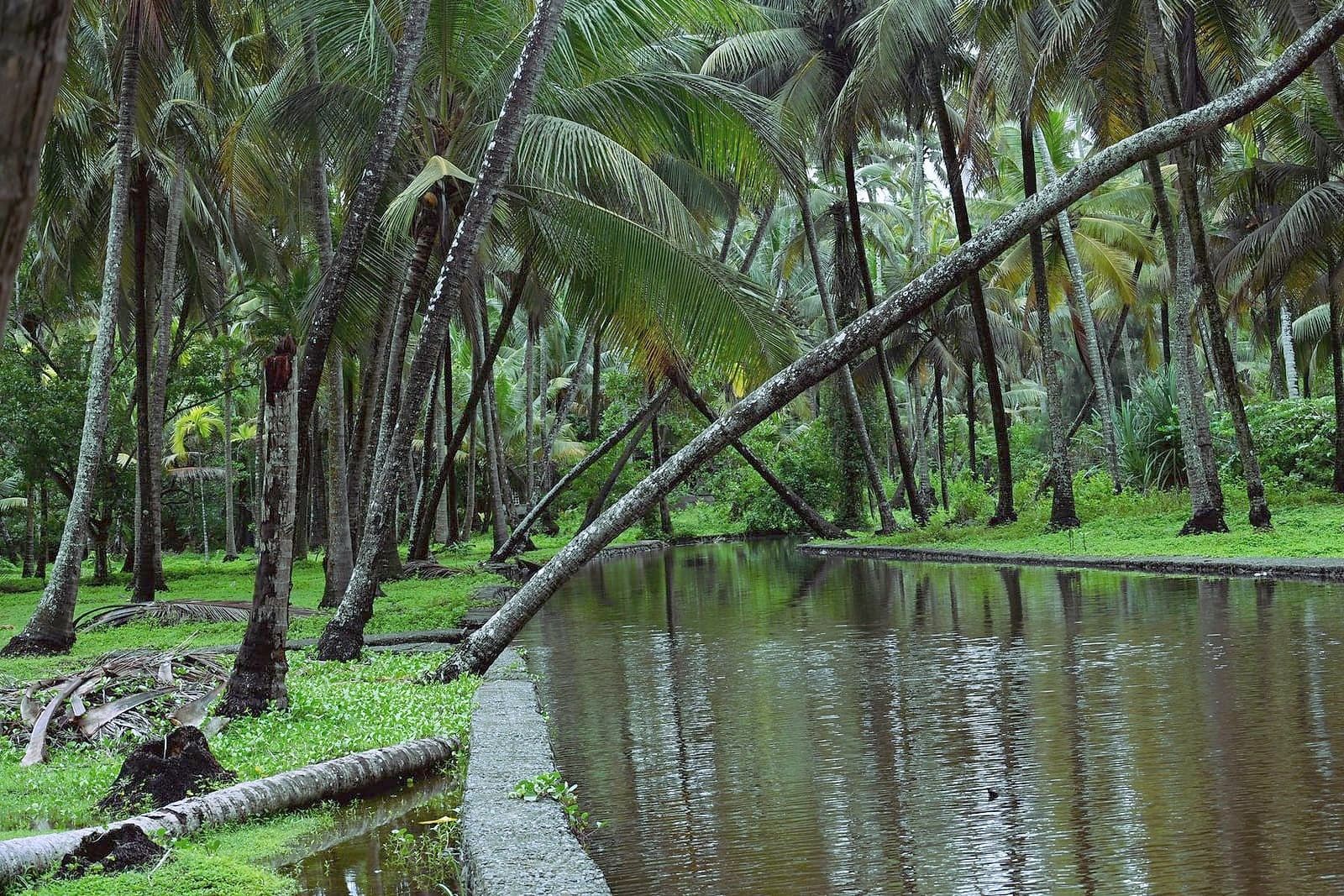
Malabar
Kerala off the tourist trail. A working Ayurvedic clinic where patients are treated every day, and where the school's courses take place.
From the knowledge base
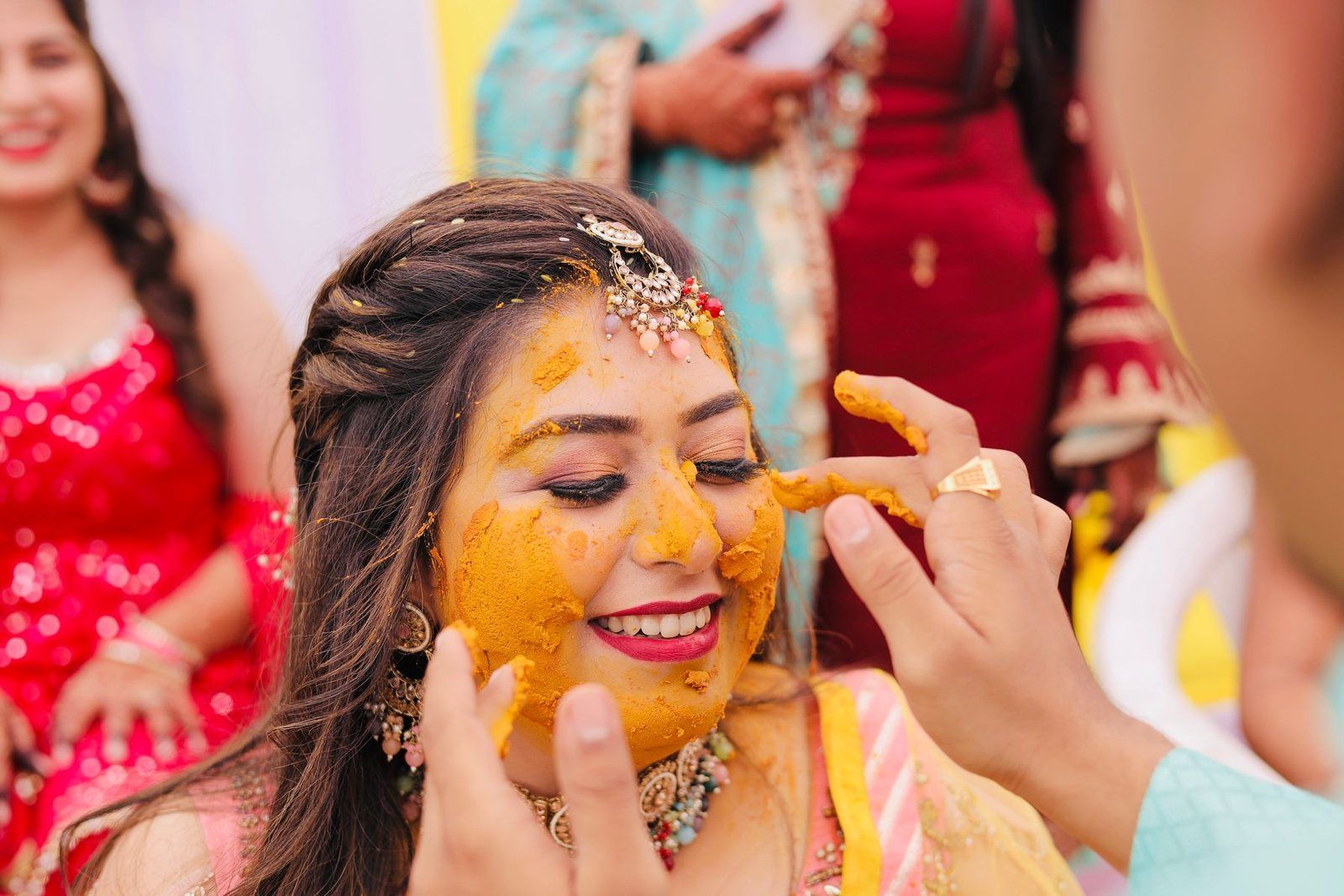
Ubtan: What It Is and How to Cleanse With It
Ubtan is an Indian cleansing blend of legume or grain flour with herbs and spices. It is mixed with water, milk or yogurt and used to cleanse the skin gently instead of soap. What goes into ubtan, how to make it at home for your skin type, how to wash with it, how it differs from an enzyme powder and a scrub, and who it doesn't suit.
Read more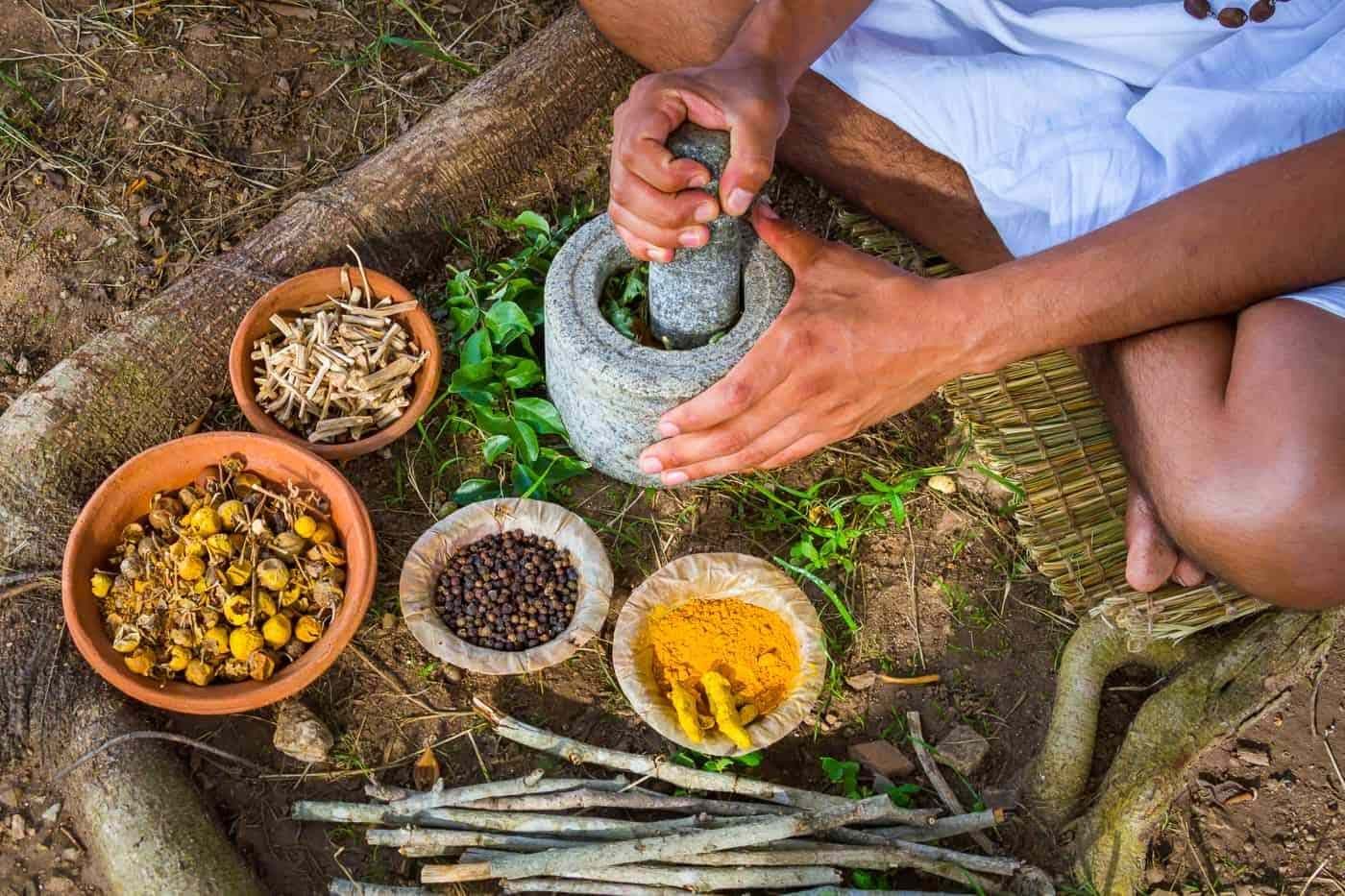
Ayurveda Books: What to Read and Where to Start
There are thousands of books on Ayurveda, but they all rest on a handful of classical texts. Here is what those texts are, which modern books to start with, where to read about panchakarma, and why no book replaces a doctor.
Read more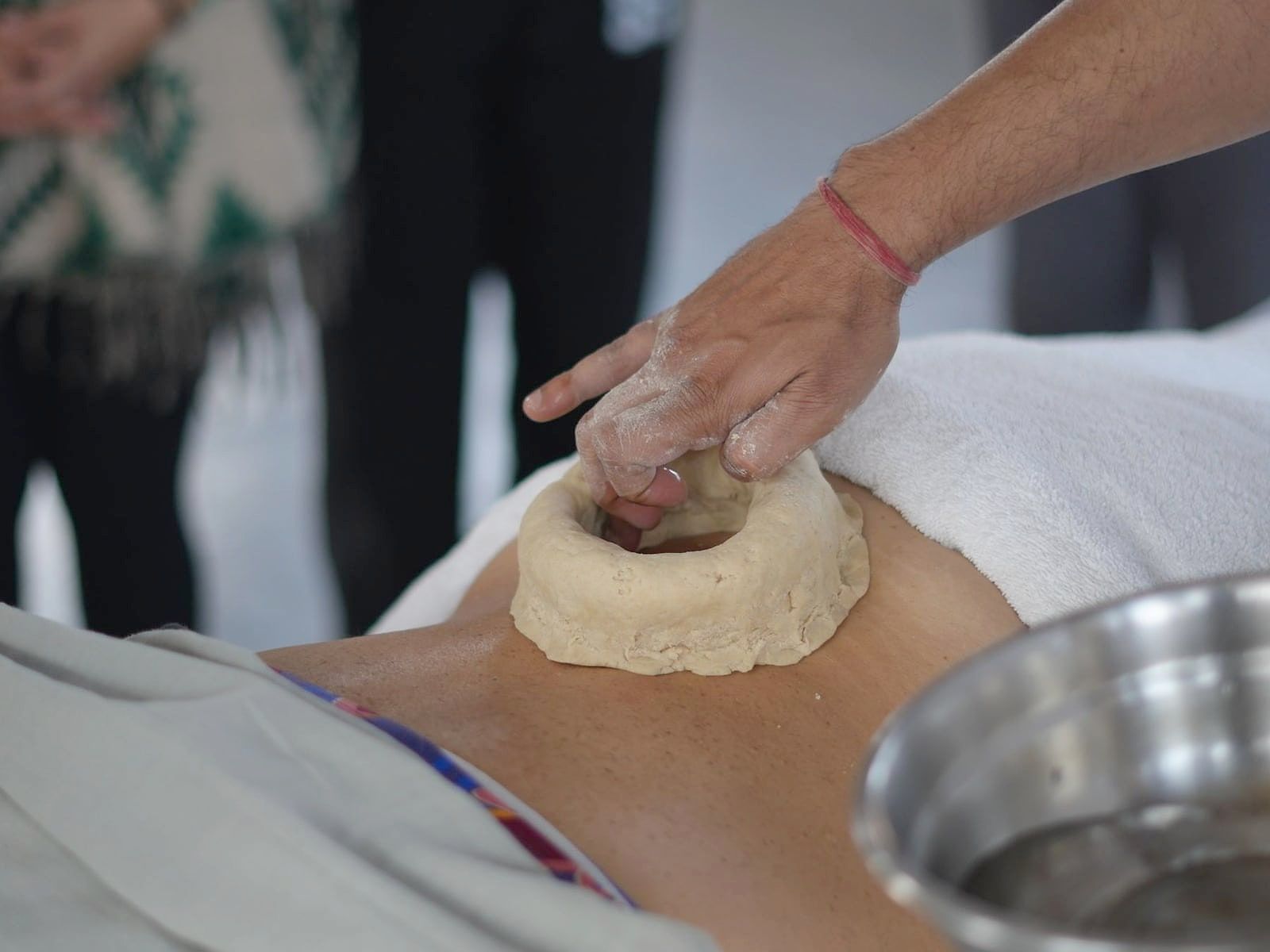
Ayurvedic Treatments: Types and How They Differ
There are dozens of Ayurvedic treatments, each with its own purpose: some nourish the body with oil, some warm it, some focus on one area, some cleanse. We explain how the classical texts and Kerala practice group them, how the groups differ and which treatments are done only on a doctor's prescription.
Read moreFrequently asked questions
Can I come just for panchakarma, without training?
Yes. Panchakarma is a separate program of 7 to 28 days in Varkala or Rishikesh. The doctor prescribes treatments after a consultation; you can start on any day, and we agree the dates on WhatsApp or Telegram.
How is this course different from a regular Ayurvedic massage course?
Most courses teach only the treatments. Ours adds online preparation before arrival, the basics of anatomy and contraindications, and — for those who want to work — how to receive clients and build a practice. A school coordinator stays with the group throughout.
What language is the training in?
English. The doctors and therapists teach directly in English, and the online lectures are recorded in English.
Do I need massage experience or a medical background?
No. The courses are open to anyone 18 and over with no prior training. The only requirements are the online module before arrival and an entry test: they bring the group to one level, so that time on site goes to practice.
When is the next course intake?
The next intake arrives on 28 February 2027: module 1 — the two-week course, until 13 March; modules 1 and 2 — the one-month course of 28 days, until 27 March. Message us on WhatsApp or Telegram for details and to book your place.
Message us
We reply personally, tell you more and help you choose the program and dates. The message is pre-filled — just press Send.
We usually reply within a few hours.