Treatments
Kizhi: Heat Therapy with Herbal Poultices
Kizhi is a Kerala treatment in which the body is tapped and rubbed with hot cloth bundles of leaves, herbal powders or medicated rice. We cover the three main types, how the treatment goes and its contraindications.
What is kizhi
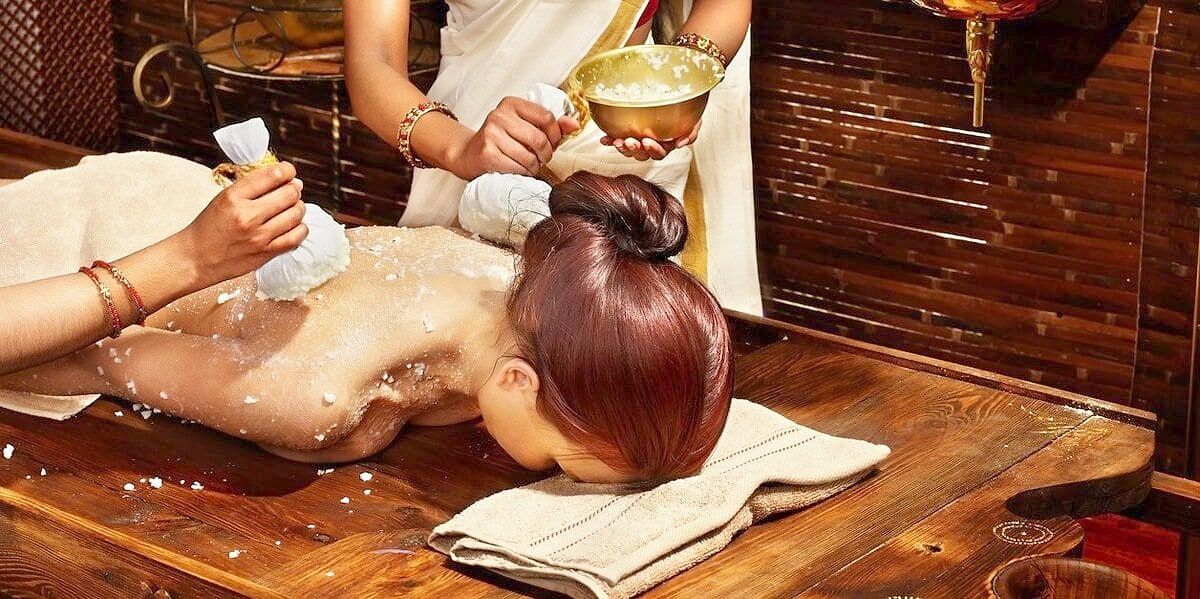
Kizhi means “bundle” in Malayalam, the language of Kerala. The Sanskrit name of the treatment is pinda sweda: “pinda” means a ball or lump, “sweda” means sweat. A filling is wrapped in a piece of cotton cloth and the ends are tied into a handle. The bundle is heated in oil, in a decoction or in a dry pan, and the body is tapped and rubbed with it while hot. In English it is often called a herbal poultice massage or herbal bolus treatment.
Kizhi belongs to swedana — sudation, warming the body until it sweats. Among the thirteen methods of sudation in the Charaka Samhita, the first named is sankara sweda: warming with a ball of medicinal substances, wrapped in cloth or not. Pinda sweda is built on this principle. In panchakarma swedana is part of the preparatory stage — we cover it in the article What is panchakarma.
The effect depends on the filling. Dry fillings — sand, powders without oil — according to the Ayurvedic texts suit kapha conditions. Unctuous ones, such as rice with milk, suit vata conditions. Mixed ones, such as leaves fried in oil, are used when both doshas are involved. That is why the doctor, not the patient, chooses the type of kizhi.
How the treatment works
- Prescription. The doctor examines the person and chooses the type of bundles, the oil and the length of the course.
- Preparation. The body is oiled with warm oil and given a short abhyanga. Talam — a little oil with herbal powder — is applied to the crown of the head. This is how Kerala practice protects the head from overheating.
- Heating. The bundles are kept in a vessel on the fire: in warm oil, in a mixture of decoction and milk, or in a dry pan. Before each touch the therapist checks the temperature on the back of their own hand.
- Working with the bundle. While the bundle is hot, it is touched to the body briefly. As the heat subsides, the therapist moves on to rubbing and circular movements around the joints. A cooled bundle is swapped for a warm one; spares are kept on the heat throughout.
- Positions. For the whole body the person is placed in seven positions in turn: seated, on the back, on the left side, on the front, on the right side, on the back again and seated. Kizhi is often done locally — only on a joint, the lower back or the neck.
- Finishing. The body is wiped down. The person rests in a room free of drafts, then takes a warm shower.
A session with leaves or powders takes 30–40 minutes. Njavara kizhi lasts longer — about an hour or more. A course usually runs 7–14 days, for njavara kizhi 7 to 21 days.
Ela kizhi: bundles of fresh leaves
Ela kizhi is called patra pinda sweda in Sanskrit: “patra” means leaf. The bundle is filled with fresh leaves of plants that Ayurveda considers calming to vata and kapha: nirgundi (Vitex), eranda (castor), chincha (tamarind), shigru (moringa). Some bundles use the leaves of a single plant, most often nirgundi.
The leaves are finely chopped and fried in a little oil. Kerala recipes add grated coconut and lemon, sometimes turmeric and rock salt. The hot mixture is placed on a square of cloth about 45 centimeters across and tied tightly. A bundle may use, for example, 250 grams of nirgundi leaves and about 100 milliliters of sesame oil. The bundles are made fresh every day.
Ela kizhi is traditionally prescribed for pain, stiffness and swelling of the joints and back. These are conditions Ayurveda describes as vata disorders: sandhigata vata (compared with osteoarthritis), low back pain, sciatica, neck and shoulder pain.
Podi kizhi: bundles of herbal powders
Podi kizhi is churna pinda sweda: “churna” and the Malayalam “podi” both mean powder. The bundle is filled with a mixture of ground herbs and seeds. The fillings include, for example, fenugreek, mustard, dill, flaxseed, and ready-made formulas such as kottamchukkadi churna and kolakulathadi churna. The latter is also used for udvartana, the dry powder rub.
Podi kizhi is done in two ways. In the oily method the body is oiled and the bundles are heated in oil. In the dry method there is no oil at all: the bundle is heated in a pan and applied to the body without a preliminary massage. The dry method is chosen when kapha predominates — heaviness, swelling, stiffness. There is also a variant in which the bundle is dipped in warmed dhanyamla, a sour fermented liquid made from grains. The powder in the bundles is changed daily.
Podi kizhi is used for the same complaints as ela kizhi: joints, back, muscles.
Njavara kizhi: rice cooked in milk and decoction
Njavara kizhi is shashtika shali pinda sweda. Shashtika is a rice variety that ripens in sixty days; in Kerala it is called njavara. First a decoction of bala root (Sida cordifolia) is made: in one recipe, 250 grams of root to 4 liters of water. In this decoction, with a liter of cow’s milk, 250 grams of rice are cooked into a thick porridge. The porridge is divided among the bundles. The remaining mixture of decoction and milk is kept on the heat, and the bundles are warmed in it.
After abhyanga the body is rubbed with the warm bundles. The rice gradually seeps through the cloth and stays on the skin as a layer of paste. At the end the paste is gently removed and the body wiped down. The treatment is performed by two or four therapists working in sync from both sides — just like pizhichil.
In Ayurvedic terms njavara kizhi warms, oils and nourishes the tissues all at once. It is considered gentle and cooling in nature, so it is also allowed with moderately elevated pitta. It is traditionally prescribed for vata conditions with muscle weakness and wasting, after a stroke, and for children with cerebral palsy — always as part of treatment led by a doctor.
Who should avoid it
The Charaka Samhita lists who must not be given sudation: pregnant women, people with a bleeding tendency, with predominant pitta, with diarrhea, diabetes, jaundice, intense thirst, the hungry, the exhausted and those who drink alcohol regularly. According to the text the area of the eyes, heart and scrotum is warmed very little or not at all, and the groin moderately.
In modern clinical practice kizhi is not done with a fever, acute inflammation, fractures, deep vein thrombosis or pronounced varicose veins. Bundles are not used on areas with skin infection, eczema or wounds. With diabetes and hypertension, especially if poorly controlled, the treatment is given only on a doctor’s decision and under supervision.
The signs of excessive sudation are described in the classical text itself: thirst, burning, weakness, dizziness, fainting. If they appear, the treatment is stopped and the person is cooled down.
What to expect afterwards
The signs of correct sudation according to the Charaka Samhita: the feeling of cold, pain, stiffness and heaviness go away, and the body becomes softer. After a session there is usually a feeling of warmth and lightness. During a course it is important not to get chilled or overexert yourself.
Clinic, spa and doing it yourself
At a spa kizhi is usually offered as a one-off warming massage with ready-made dry bundles. In a clinic it is a doctor’s prescription: the doctor chooses the type of bundles, the filling and the oil, the bundles are made fresh every day, the treatment is given as a course, and the person’s condition is monitored. That said, kizhi is one of the external treatments that belong on a spa menu, provided the therapist is trained and respects the contraindications; what else can go on the menu is covered in Ayurvedic treatments in the spa.
We don’t advise trying kizhi at home. The main danger is burns. A bundle taken out of hot oil holds its heat for a long time, and there is a pan of oil on the fire close by. The therapist checks the temperature on their own hand before every touch and starts with brief applications. This skill comes from practice, not reading. Besides, heat treatments have contraindications that a doctor must assess. This article does not replace a consultation.
On the school’s one-month course students make leaf bundles for ela kizhi themselves, cook the rice for njavara kizhi and practice both treatments under their teachers’ supervision.
Sources
Frequently asked questions
How is ela kizhi different from podi kizhi?
In the filling of the bundle. In ela kizhi it is fresh leaves of medicinal plants fried in oil; in podi kizhi it is herbal powders heated in oil or in a dry pan. Which type is needed is decided by the doctor according to the person's condition.
Is kizhi hot or painful?
The bundle should feel distinctly hot but bearable. Before each touch the therapist checks the temperature on their own hand and at first only applies the bundle briefly. If it burns, say so immediately.
How many kizhi sessions are needed?
In clinics kizhi is prescribed as a course: ela kizhi and podi kizhi usually for 7–14 consecutive days, njavara kizhi for 7 to 21 days. The exact length is set by the doctor.
Can I do kizhi at home myself?
It's not a good idea. The bundle is heated in hot oil or decoction, and without skill it is easy to get burned. Besides, heat treatments have contraindications that a doctor assesses.
What rice is used in njavara kizhi?
Shashtika — a medicinal rice variety that ripens in sixty days; in Kerala it is called njavara. The rice is cooked in milk with a decoction of bala root, and the bundles are filled with this porridge.
Message us
We reply personally, tell you more and help you choose the program and dates. The message is pre-filled — just press Send.
We usually reply within a few hours.